Overview
Non-Credit, Synchronous Online with CVPA 399 3-Credit Option Available
In Fall of 2026 George Mason University will offer its first-ever course in Audio Description.
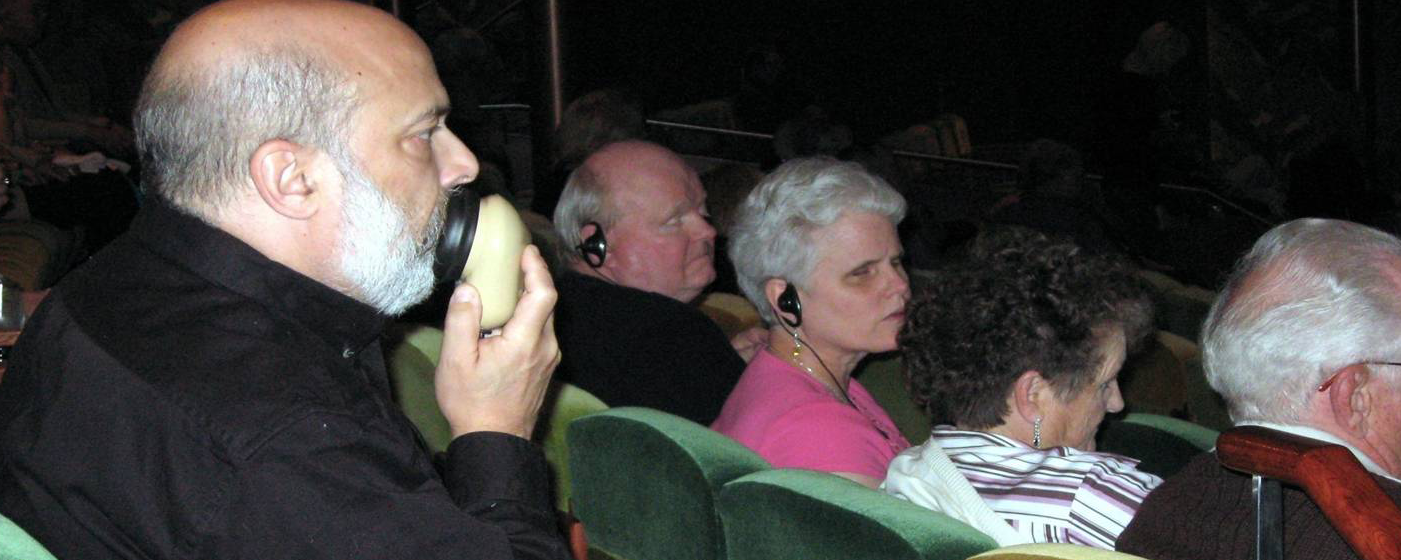
The online, interactive sessions (limited use of lecture, questions/discussion throughout, generous use of media, and individual and group writing exercises) are designed to provide immediate feedback and “give and take,” allowing for adaptation according to a sense of participants’ grasp of the material. In addition, experienced users of audio description are a part of the course providing an important perspective throughout the sessions.
BE A PART OF IT!
Writers – Theater Artists – Media Makers – Visual Art Creators
How do you make the arts accessible to someone who can’t see it? Maybe they’re blind or have low vision — maybe they’re in the wrong room. Or maybe arts access is its own kind of aesthetic innovation.
Audio Description (AD) makes visual images accessible for people who are blind or have low vision. Using words that are succinct, vivid, and imaginative, audio describers convey the visual image from myriad art forms that is not fully accessible to a significant segment of the population (more than 32 million Americans experience significant vision loss).
Who Should Attend?
Anyone interested in:
- Working as freelance description writers for broadcast television or film/video (the implementation of the 21st Century Communications and Video Accessibility Act has spawned a virtual cottage industry for the development of description for media)
- Working as a describer in a local performing arts program
- Working as a describer for museum exhibitions
- Experienced audio describers desiring an updated refresher course.
Topics Include
- Audio description history and theory
- The “Four Fundamentals of Audio Description” ©
- Active seeing/visual literacy-developing skills in concentration and observation
- The art of “editing” what you see
- Vivid language: “The Visual Made Verbal”™
- “Speak the speech, I pray you”– using the spoken word to make meaning
Each registrant will receive a PDF copy of Dr. Joel Snyder’s The Visual Made Verbal: A Comprehensive Training Manual and Guide to the History and Applications of Audio Description published by the American Council of the Blind.
Participants enrolled in this non-credit option will receive a Letter of Completion with course hours to be applied towards professional development hours (with administrator approval). Students interested in the CVPA 399 credits should enroll for the course through the University Catalog.
Program Details
Dates: Mondays, August 24–December 7, 2026 (15 weeks)
10:30 a.m.–1:10 p.m.
Skip dates: September 7, October 12, 2026
Tuition: $850
Location: Online – synchronous
Faculty
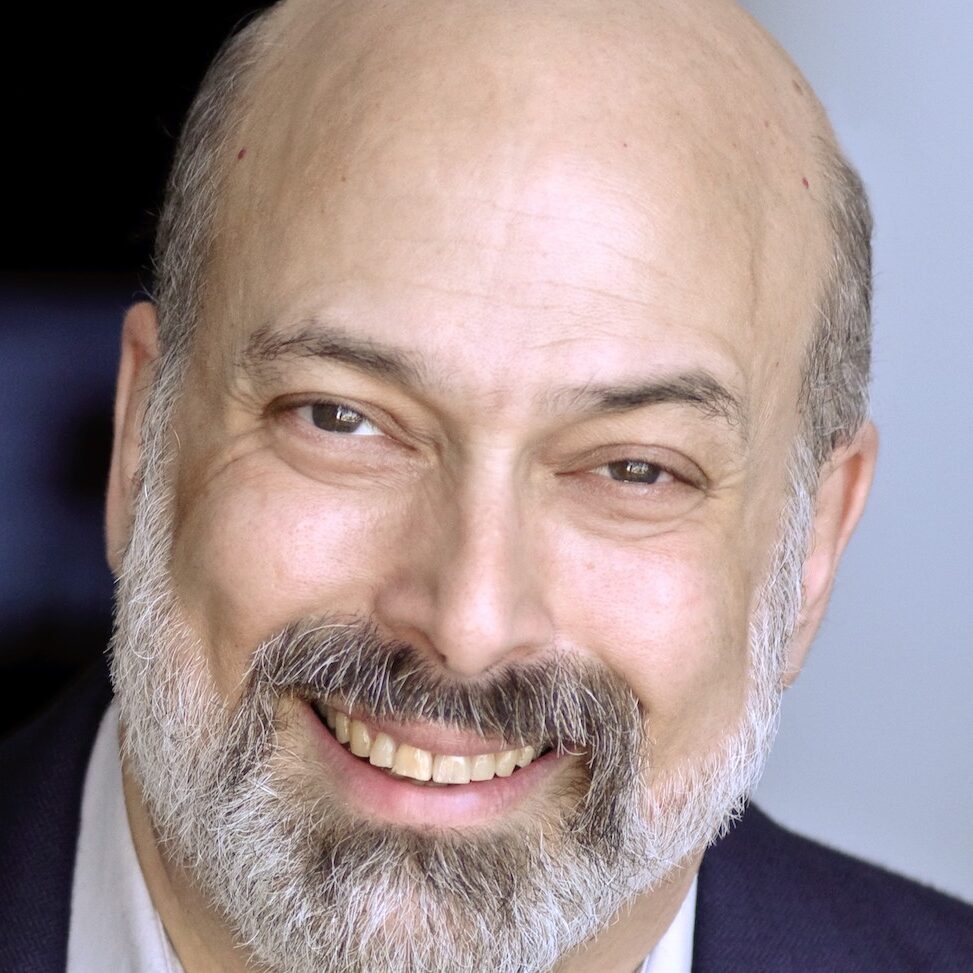
Dr. Joel Synder
President, Audio Description Associates, LLC
Founder/Senior Consultant, Audio Description Project, American Council of the Blind
Read More
One of the first audio describers, Joel Snyder, Ph.D. is a true pioneer in the audio description field. He began describing theater events and media in 1981. A member of the Actors’ Equity Association, the American Federation of TV and Radio Artists, and the Screen Actors Guild, and a 20-year veteran of work as an arts specialist for the National Endowment for the Arts, he is perhaps best known internationally as one of the first “audio describers” at the world’s first audio description service (c. 1981).
Beginning in the early 1970s, he recorded “talking books” for the Library of Congress and read privately for individuals who are blind – but his abilities as a describer have made thousands of live theater productions accessible to audience members who are blind; in media, Dr. Snyder has used the same technique to enhance PBS’ American Playhouse productions, Sesame Street, a wide range of network broadcasts, feature films, educational videos, the IMAX film Blue Planet and the Planetarium show And A Star To Steer Her By at the Smithsonian Institution’s National Air and Space Museum.
Under contract to the American Council of the Blind (ACB), Dr. Snyder is the founder of and senior consultant to ACB’s Audio Description Project (ADP) designed to boost awareness of description in all formats throughout the United States. The ADP produced description for ABC-TV’s nationwide coverage of both of President Obama’s inaugurations and President Trump’s inauguration. Dr. Snyder’s company also provided live audio description for events on the mall and throughout the city for President Obama’s 2008 inaugural festivities—national prayer breakfast, Lincoln Memorial, parade route. He also authored and produced the first-ever audio described tour of The White House (suspended during the Trump years). The Audio Description Project also produced description for the 30th anniversary DVD release of The Miracle Worker featuring Patty Duke as “Annie Sullivan” and the description for the Arts & Entertainment Network’s biography, Barack Obama. The ADP sponsors the annual Audio Description Awards, coordinates international conferences on audio description, conducts the biannual Audio Description Institute, offers the “BADIE” (Benefits of Audio Description In Education—formerly the Young Described Film Critic) contest for students who are blind (the “Listening Is Learning” initiative, sponsored in conjunction with the Described and Captioned Media Program), produced the August 2017 international broadcast of live audio description of the total solar eclipse, and maintains the ADP website, the leading resource for information on audio description in all genres: https://adp.acb.org.
As Director of Described Media for the National Captioning Institute, a program founded by Dr. Snyder, he led a staff that produced description for nationally broadcast films and network series including Sesame Street broadcasts and DVDs. He was a member of the American Foundation of the Blind’s “expert panel” charged with reviewing guidelines for educational multi-media description and has been a member of several media access panels at the Federal Communications Commission (FCC) as well as the Disability Access Committee of the International Telecommunications Union and the Description Leadership Network of the Video Description Research and Development Center.
In addition to work principally in media and audio description training, Dr. Snyder’s Audio Description Associates, LLC develops audio described tours for major museums and visitor centers throughout the United States including the writing/voicing of an audio described tour of the Enabling Garden at the Chicago Botanic Garden, the National Aquarium in Baltimore, the International Spy Museum in Washington, DC, the J. Paul Getty Museum in Los Angeles, the Albright/Knox Gallery in Buffalo, the Salvador Dali Museum in St. Petersburg, FL, several Smithsonian Institution exhibits including the National Museum of American History’s “The Flag That Inspired the National Anthem”, and myriad National Park Service and US Forest Service facilities including Yellowstone National Park and the Grand Canyon.
Dr. Snyder has trained describers or introduced description techniques more than 40 states and in 64 nations. In 2019, Dr. Snyder was named a Fulbright Scholar and used the award to spend the month of December training describers in Athens, Greece and conducting workshops in Malta and Ukraine.
Dr. Snyder received his Ph.D in accessibility and audio description from the Universitat Autonoma de Barcelona, Barcelona, Spain. His book, The Visual Made Verbal: A Comprehensive Training Manual and Guide to the History and Applications of Audio Description, is published by the American Council of the Blind and is now available in Braille and as an audio book from the Library of Congress Division of the Blind and Physically Handicapped, in a separate version voiced by Dr. Snyder, in screen reader accessible formats, and in English, Spanish, Chinese, Polish, Russian and Portuguese. An Italian edition will be released in 2023.
Notes
- Please note that group classes are subject to cancellation if minimum enrollment is not reached.
- Be sure to check our policies and procedures regarding registration, withdrawals, refunds, and more for fall or spring group classes.
- All students will receive a Welcome Letter via email at least one week before the class starts with all necessary details.
- Online registration closes two business days before the first class, however space may still be available. Please contact [email protected] for more information. A $10 late registration fee may apply.
- For additional information, please contact the Academy at [email protected].