Mason Community Arts Academy
Categories
Events Music Uncategorized

Teaching Artists at Work: A Behind-the-Scenes Look at the Rehearsal Process for the Academy Music Faculty Chamber Recital 

Walking through the halls of the Academy building on Chain Bridge Road, you might hear a myriad of instrument combinations this week. Saxophone and guitar; flute, oboe, and piano; violin and viola; vocalists; and piano duos are a few collections of sounds one might hear wandering through the building. In this article, we’ll give you a behind-the-scenes look at our Teaching Artists’ preparation for the upcoming Academy Music Faculty Chamber Recital and what it takes to prepare for this kind of performance. 

Wandering over to Unit A6, you might hear a curious pairing of instruments, a soprano saxophone and a guitar. Teaching Artists Ariel Williams (saxophone) and Brian Slaymaker (guitar) are hard at work rehearsing a tango composed by Astor Piazzolla. The piece, Nightclub 1960, evokes the dimly lit music halls of the 1960s with an exciting combination of a tango and the popular bossa nova style of the time.  

At the moment, Ariel and Brian are rehearsing the many tempo changes in the piece, from the upbeat, thrilling tango sections to the smooth lyrical sections. In addition to tempo variety, another challenging aspect of the work is the difference in timbre, musical tone color, between the two instruments. These expert musicians will need to listen carefully to one another to blend their tones to create a harmonious ensemble sound. 

Let us visit another chamber ensemble! In Unit A3, Dr. Nayoon Choi (flute), Jiyoon Oh (oboe), and Yechan Lim (piano) are rehearsing Suite Bourgeoise by Malcolm Arnold. Written when the composer was just 18 years old, Suite showcases Arnold’s youthful wit and penchant for melodic and stylistic variety. Our faculty trio is preparing to perform three movements from the work: Tango, Ballade, and Valse. 

Rehearsing Suite Bourgeoise presents the challenge of balancing the sharp, rhythmic precision of the Tango and Valse with the fluid, lyrical expression required in the Ballade. To achieve a unified ensemble balance across flute, oboe, and piano, the trio utilizes meticulous pulse subdivision and dynamic adjustment during rehearsals. Working through Arnold’s vibrant blend of playfulness and nostalgia makes the collaborative process both demanding and immensely rewarding. 

Suddenly, exuberant, passionate chords ring out from Unit A2! Carol Feather Martin and Dr. Estrella Hong are rehearsing our exciting recital closer, the Overture movement of Nicolai Kapustin’s Sinfonietta, Op. 41. Kapustin composes in a style more at home in the jazz halls of America in the 1920s than the Russian concert halls of his compositional home in Moscow. Originally an orchestral piece, this four-hands arrangement of Sinfonietta for piano reflects the blending of these musical styles in Russian-inspired harmonic textures and melodic themes masterfully combined with a pseudo-improvisatory style. 

Sinfonietta’s mix of styles makes it great fun to perform, but also challenging to rehearse. The piece includes complex rhythmic patterns and syncopation, which gives it a jazzy feel. The performers need to find a tempo that is achievable to perform and enjoyable for the audience to listen to. Carol and Estrella worked hard to carefully rehearse their parts individually before beginning to rehearse together. This individual accountability makes their rehearsal time together more productive. They can spend time rehearsing the ensemble aspects of the piece, like hand crossings and group accents, and avoid wasting valuable rehearsal time. 

If frozen in time, these scenes form a tableaux series that represents the heart of the Teaching Artist title. In addition to being dedicated pedagogues and teachers, our faculty are also top artists and professionals in their fields. We hope you’ll join us this Sunday, November 1 at 3 p.m. as we celebrate our Teaching Artists’ creativity and spirit of collaboration. 

References

Nightclub 1960 Full Program Notes

Kevin Melendez, Graduate Recital Program Notes (2023)

Suite Bourgeoise Full Program Notes

The Music Realm, Suite Bourgeoise Product Description

Sinfonietta Full Program Notes

Tom Neenan, Program Notes (2022)

Categories
Music Private Music Lessons Uncategorized

A Collaborative Adventure: Tips from a Collaborative Pianist

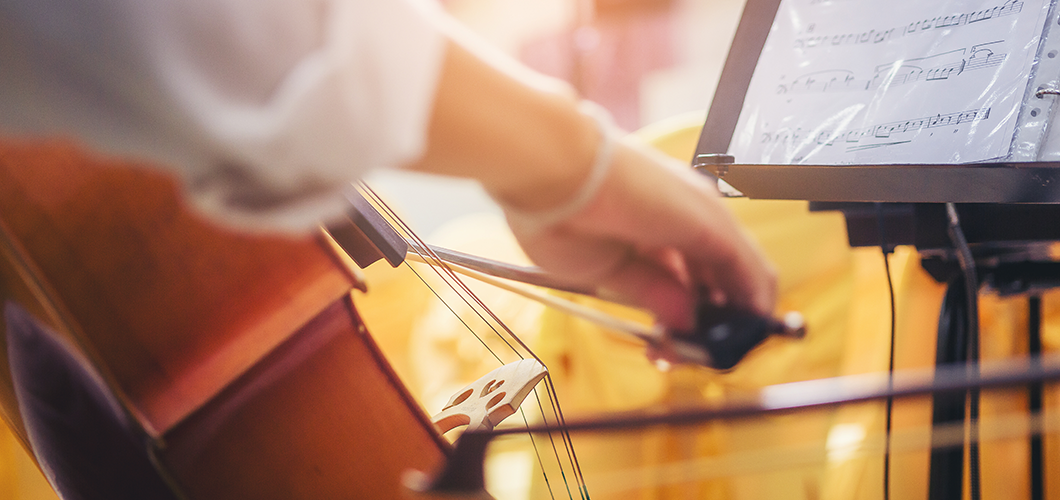
Carol Feather Martin, collaborative pianist, with student violinist during the Spring 2026 Academy Recitals.

In addition to teaching piano at the Academy, Carol Feather Martin also serves as a collaborative pianist for our student and faculty recitals. In this article, she provides tips and tricks that every musician should know before embarking on the collaborative adventure of working with a collaborative pianist.


Serving as a collaborative pianist is one way for keyboard musicians to have the opportunity to perform chamber music. Yes, it is a collaborative adventure, not just an accompanist. While you might think that the duty of making things match and work together is magical or falls on the keyboard player alone, that is not true.

All participants are involved in the subtle (and sometimes not so subtle) art of cueing, or communicating with non-verbal movements or gestures. A musician cues to begin the selection and when things change throughout the piece – such as change of tempo, mood, or dynamic. Each player should know what all the other parts are doing at any given time. Melodies and other interesting lines are often traded between instruments.

Here is a quick checklist for anyone looking to collaborate with a keyboard musician.

  1. Learn how to give cues and communicate.
  2. Be prepared for teamwork.
  3. Study the piano score. Know your music and be able to keep steady rhythm throughout.
  4. Be respectful of everyone’s time. Arrive early so that you and your instrument are ready to go.
  5. Provide clean PDF copies (or originals) to the keyboard musician in a timely manner. If submitted digitally, these should be high-quality scans, not photos.
  6. Be ready to have fun.

Written by Carol Feather Martin

Edited by Ariel Williams

Categories
Music Uncategorized

Four Practice Techniques for Musicians Who Feel “Stuck”

Practice techniques are important strategies to have in your musical “toolbox” when you come across a challenging spot while practicing. Generally, these strategies can help to narrow your focus on a specific issue or give your brain a little extra time to think about what exactly needs to happen for successful execution.

Here are four strategies to try:

  • If you’ve come across a section that is giving you trouble, it’s best to avoid starting an entire phrase over and hoping for the best. Identify the spot that is giving you the most trouble and use a practice technique to break it down into small, manageable bits. You’ll find that practice is a lot more efficient this way!
  • Adding a rest between a shift, chord change, or a string crossing gives you time to form the shape you need without being rushed. I like to start with a half rest, then go to a quarter rest.
  • When you’re trying to reach a tempo that is too fast to handle right now practice the piece at a much slower tempo that you can achieve 100% accuracy. After you’ve become more comfortable with the slower tempo increase by 4-8 BPMs. Continue the process of adding speed in small increments as you master each tempo. There should be no hurry to play fast, and sloppy. You will play much better fast, by building your speed slowly.
  • It is effective to practice using one hand at a time with just about every stringed instrument including the piano. For violin and guitar strumming, picking, or bowing the rhythm without your fretting hand focuses directly on the rhythm, and the up or down bows/strums.

Written by Brian Slaymaker and Amanda Goodwin
Edited by Regina Schneider

Categories
Uncategorized

Virginia String Teachers Association Awards

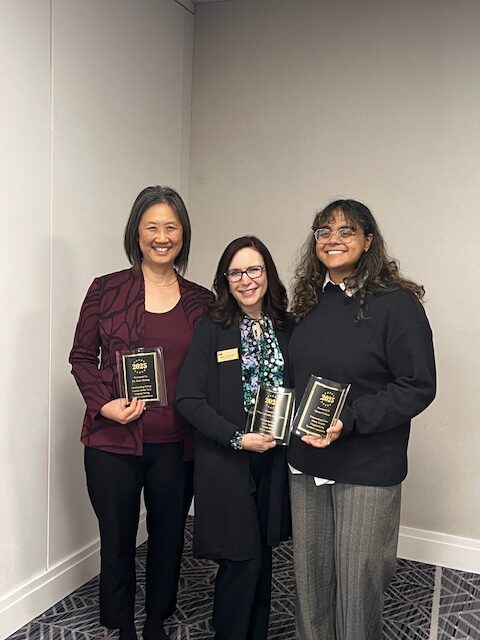
Mason Community Arts Academy is thrilled to be the recipient of the Virginia String Teacher’s Association 2025 Distinguished Service Award.

We congratulate our longtime collaborator and Mason String Intensive Director June Huang on being named String Teacher of the Year. We also congratulate MCAA instructor Alyssa Cabassa on receiving the Future Music Teacher Award.

Special thanks to Jenna Day of Day Violins for nominating the Academy, and for her lovely comments included in the award presentation.

Categories
Uncategorized

Remembering Dean Bill Reeder

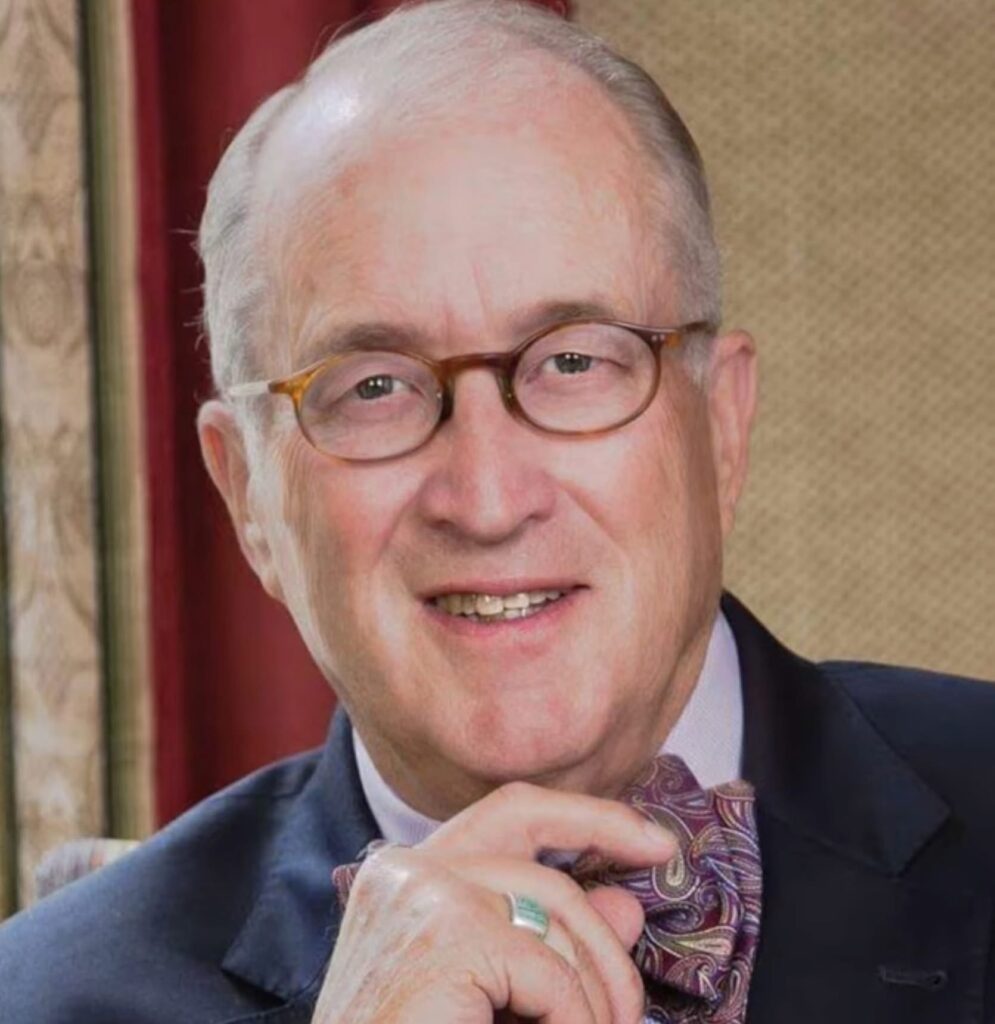
With heavy hearts, we share that our friend and former College of Visual and Performing Arts (CVPA) Dean Bill Reeder has passed away after an extended illness. In addition to his numerous, remarkable achievements noted below, it was Bill’s spirit and vision for a community arts school within CVPA that inspired what began as the Potomac Music Academy and has become our thriving Mason Community Arts Academy. 

Bill was the founding dean of CVPA, joining George Mason University in 2001 to lead the newly formed college after a distinguished career as an operatic tenor and arts administrator. He served as dean until May 2015, and continued to work in the Arts Management program, one of three new academic programs, including Film and Video Studies and Computer Game Design, that were launched under his leadership. Bill was at the helm of a long-held community vision for an arts center serving Manassas and Prince William County. Bill’s advocacy led to the creation of the Hylton Performing Arts Center on what is now the Science and Technology Campus. 

We will be forever grateful for all of Bill’s support, and the pride he took in how effectively his goals for a community arts program came to fruition with the Academy. Memorial details will be shared at a later date.