Mason Community Arts Academy
Categories
Music

Music Teachers Get Inspired at Mason

Categories

Teaching music to children in our schools can be as challenging as it is rewarding. Even the most experienced, well-grounded instructor needs a little boost now and then. Whether its finding new inspiration for the classroom, attaining Certification to further a career, gaining Graduate credits towards a degree, earning Recertification points for a school district, or a mix of any of the above – elementary and middle school music teachers can get “transformed” through the Orff Schulwerk Teacher Education experience at George Mason University in Fairfax, VA.


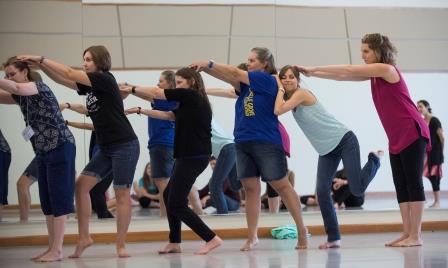
What is Orff Schulwerk? According to the Orff methodology, through singing, rhythmic speech, body percussion and movement, children gain experience and develop instincts for making music in a joyful and accessible way. Orff Schulwerk uses songs, rhymes, games and dances to explore traditional and original music in the elemental style, introducing skills and concepts in a logical and integrated way. The Orff program at Mason is approved by the American Orff Schulwerk Association.
 

Orff15ZznEmail

ORFF CERTIFICATION LEVELS COURSES     July 18-29, 2016

“Music teachers – now is the time to start (or continue) your work in Orff Schulwerk!” exclaims Program Director Donna Fleetwood. “Begin your journey with Orff Schulwerk this summer and take creative ideas back to the classroom this fall. Or, continue the good work you have begun by taking the next Level while skills and concepts are fresh. Expand your learning among supportive instructors and peers who will become life-long colleagues.”

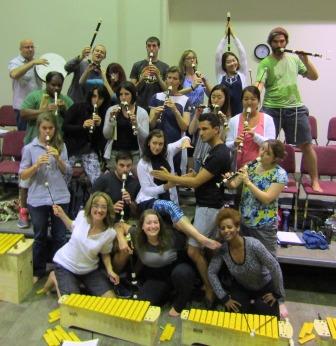
Mason offers Levels I, II and III, taught by an outstanding faculty, including:  Joyce Stephansky and Donna Fleetwood (Level I), Matt McCoy and Betsy Kipperman (Level II), Steven Calantropio (Level III),  John Crandall (Recorder), and Victoria Redfearn-Cave (Movement).
See Faculty Bios

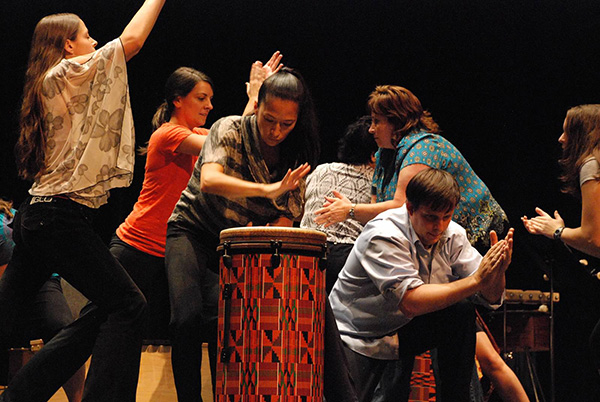
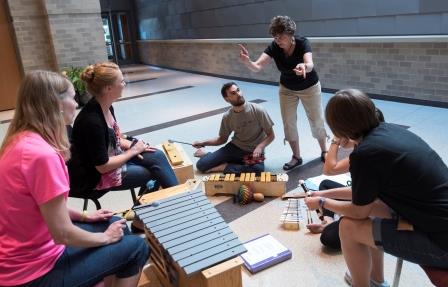
Participants spend two action-packed weeks in lectures, discussions, demonstrations, and hands-on applied activities, culminating in a final sharing presentation on the last Friday, involving music, rhythm and movement. Participants who successfully complete Level III are awarded the Certification in Orff Schulwerk as regulated by the American Orff Schulwerk Association.

SEE FULL CERTIFICATION PROGRAM DETAILS
 

Orff15ZzeEmail

ORFF SUPPLEMENTAL COURSES     July 11-15, 2016

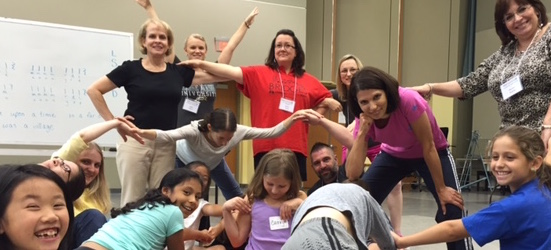
Exciting one week supplemental courses, which occur the week prior to the Levels courses, are designed to enrich and enhance the Orff experience, as well as introduce emerging techniques. Whether it’s an introduction or a “next step”, these courses give teachers an opportunity to expand their knowledge and invigorate their teaching methods.

“To enhance your work in Orff Schulwerk,” says Donna Fleetwood, “take a course that develops confidence and expertise in the Orff Schulwerk approach.”

  • Master Class in Orff Schulwerk with Steve Calantropio: This highly anticipated class promises to be a capstone experience for those who have completed Level III and wish to extend their studies of elemental music and style with a leading expert in Orff Schulwerk practice. Take away exciting ideas for the classroom and an expanded view of Orff Schulwerk.
    “The course massively stretched my musicianship,” said one past participant.
    “The instructor was extremely well prepared and knowledgeable,” said another.
  • Rhythmic Training for Elementary and Middle School Teachers with Jim Solomon: Always a popular class for those who wish to develop skills in drumming and un-pitched percussion while learning rhythmic techniques for teaching and creating in a highly motivated environment.
    “I came in scared of rhythm and feeling like I wouldn’t do well, but I’m leaving feeling empowered and confident,” said a former student.
    “It has solidified and expanded the teachings of the Orff Levels,” said another.
  • Elemental Drama Collective with Donna Fleetwood and Bonny Tynch: Discover how an Elemental Drama approach can lead to seamless teaching while preparing to showcase student creativity and skill. The focus is on Orff Schulwerk teachers working collaboratively with peers and with children. This year, the time is extended for more strategies, materials and peer interaction.
    “It was very rewarding working with actual students throughout the week,” said one enthusiastic participant, “and being able to see their transformation as they became more and more comfortable sharing their ideas and getting involved in the creative process.”
 

Orff15Zzt


“Now is the time to challenge yourself with something new!” advises Ms. Fleetwood.

  • Eurhythmics Level I, American Eurhythmics Society Certification: New this year, by popular demand, Mason is offering a class in Eurhythmics. This Dalcroze-inspired class enables participants to develop eurhythmic and improvisational skills. Dr. Todd Anderson takes your music and movement training to a new level with a one-week intensive class, and the option to continue with additional support in an online course in the fall. Students are encouraged to progress at their own pace after the intensive one-week course towards American Society of Eurhythmics Certification. Date exception: July 18-22
    “Experiencing Eurhythmics has opened my mind to an entirely new perspective on music education,” stated Maria Franzini, a MM in Piano Pedagogy/Performance at George Mason. “The approach has taught me to observe students and base lessons on their interests and capabilities. It has freed my own body to be more expressive and my mind to be more creative. All this results in greater involvement in and enjoyment of music from students.”
  • Laban Applications for the Music Teacher, Part II with Dr. Lisa Billingham: Continue the study of the Laban Movement Theory as it applies to the classroom and everyday life. Movement exercises, actively coached conducting gestures, and an option to conduct peers in a recital venue, add to your kinesthetic toolbox and to your life!
    “Having Laban language and full-body movement exercises informs conducting gestures in a way that helps remove superfluous movements from showing the music,” said Michael Wu. “Laban’s choreography helps conductors understand their bodies in the context of a dance.”
    “Because of [Laban Applications Part I], I was able to help transform the sound of my young instrumentalists and help them perform with more musical nuance,” said Nathan Sorensen. “This is a class that I would recommend to any musician, whether they perform in the Band, Orchestra, or Choir.”
  • Conversational Solfege with Rachel Grimsby: Continues the study in the Feireabend approach at Mason with a focus on, strategies, materials and curriculum. Certification in Feierabend Association for Music Education (FAME) can be earned upon completion of the class.
  • Alexander Technique for Music Teachers with Robbin Marcus: Learn new ways to adjust to the physical and mental demands of music teaching. Those who conduct, play an instrument and perform a myriad of classroom activities, gain deep structural support and develop an increased physical awareness.
  • Brush Up Your Kodaly with Robbin Marcus and Ivy Rawlins Ward: Expands skills and repertoire in Kodaly through dulcimer playing and the beloved music and singing games of the Ritchie Family. Ivy Rawlins Ward’s invigorating sessions brush up solfege skills. Take back new materials, a new instrument to play and sharpened skills.
    “Robbin’s vast experience and knowledge of contra dance & play party dances was thrilling,” said one former participant. “She has inspired me to find time to dance more with my students.”
    “Ivy really challenged us to a new level of musicianship for ourselves,“ said another.

SEE FULL SUPPLEMENTAL COURSE DETAILS
 

Orff15ZaEmail


“Now is the time to sign up and reserve your spot.” says Donna Fleetwood. “On-campus housing options are also available to reserve up to April 14th. Bring in the 2016-17 school year with a renewed vision and refreshed vigor!”
Donna Fleetwood


SEE ALL TEACHER TRAINING OPTIONS
 

Categories
Film & Video

And The Oscar Goes To…

Categories

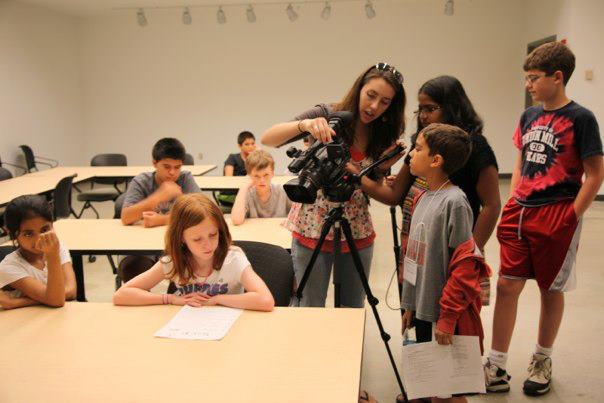
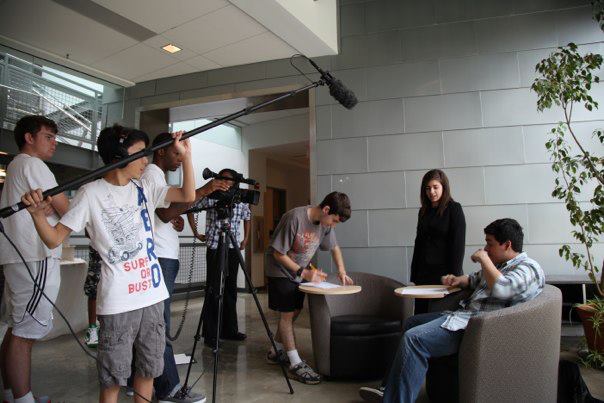
Aspiring young film-makers have the opportunity to immerse themselves in the film production process this summer at our Filmmaking Workshop, presented by Mason’s Film & Video Studies program.

FV12N

Precluded by the one-week Screenwriting Workshop, June 27 – July 1, the two-week Filmmaking Workshop focuses on the many aspects of film production, including:

  • directing
  • videography
  • location sound
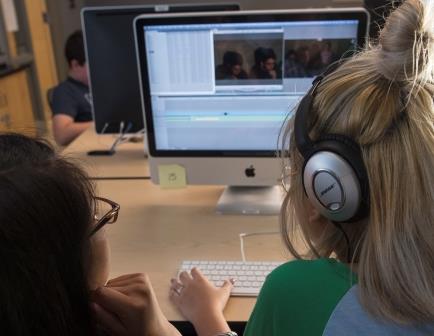
  • editing

FV12J

Students will direct, shoot and even act in original short films. By the end of the two weeks, students will have a completed video which will be published online. Mason Film & Video Studies professor Amanda Kraus will instruct participants, using university resources, equipment, and facilities. Past student films have included comedies, dramas, and thrillers.

Film15CWeb

The Workshop is divided into two age groups to maintain age-appropriate story content for each group:

FILMMAKING WORKSHOP FOR AGES 11-14, JULY 25 – AUGUST 5

FILMMAKING WORKSHOP FOR AGES 15-18, JULY 11 – JULY 22

This popular program tends to fill up quickly, so be sure to sign up soon!


Categories
Community Outreach Instruments in the Attic Music

IiA – A Violinist In The Making

Categories

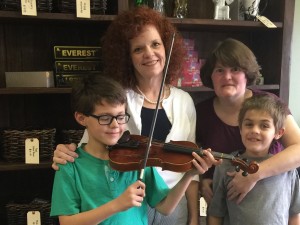
Jenna Day of Day Violins recently teamed up with Potomac’s Instruments in the Attic program to bring the joy of music to one very enthusiastic youngster, whose family was going through some hardship.

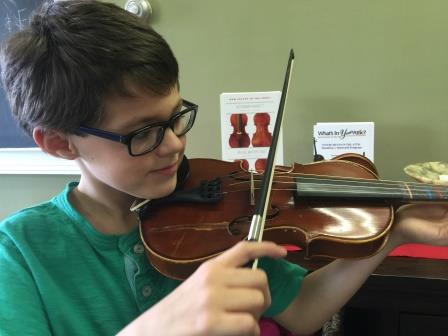
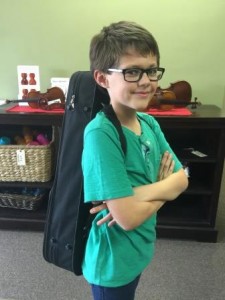
“I was at an instrument petting zoo event recently when a young boy named Nicholas and his mother came by,” said Jenna. “We started talking and I showed him several musical instruments. Throughout the two hour event, Nicholas kept coming back around again and again to the violins. He would patiently wait until I was done with another child and then eagerly smile at me and ask to try the violin again.”

IiANicholasFeb2016G

By the end of the event, it was clear to both Jenna and Nicholas’ mother that he was very interested in the violin. When Jenna epxressed that he should start lessons, his mother explained that because Nicholas’ younger brother had just been in the hospital and hefty medical bills were looming, buying an instrument was not an option at this time. Jenna immediately thought about the Instruments in the Attic program, with its mission to provide recycled used musical instruments to deserving young musicians. When Jenna mentioned the program to them, Nicholas said, “You mean, I could have a violin to play all summer?”

In fact, Potomac Arts Academy Director Libby Curtis  arranged to loan a violin to Nicholas for the entire year!

“Nicholas is thrilled! He spent the rest of the afternoon looking up music for the violin on YouTube and actually found some easy songs to follow allow with,” his mother said. “He was very intent on learning ‘Twinkle, Twinkle Little Star’ and is actually pretty close! He is one excited kid!! Thank you so much for all you are doing to get him an instrument, it is truly appreciated!”

IiANicholasFeb2016EWeb

Instruments in the Attic is such an amazing program,” said Jenna Day. “It provides instruments to children from all walks of life, who otherwise would be unable to experience the joy of music! Thank you, Instruments in the Attic and the Potomac Arts Academy for making another child smile!”

The Academy would like to thank Jenna Day for assisting us with helping to make Nicholas’ musical dreams come true, despite life’s challenges. We also give a heartfelt thanks to our generous community members who have donated their used musical instruments and funds for instrument repair. We hope you enjoy seeing your donations in action!


LEARN MORE ABOUT INSTRUMENTS IN THE ATTIC


Categories
Music

Faculty Feature: Jennifer Keller

Categories

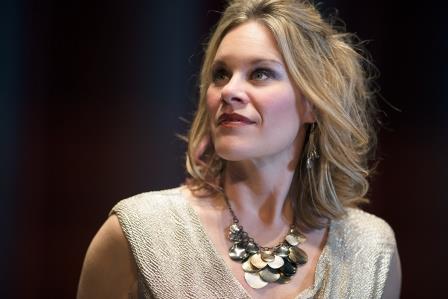
Teaching Artist Jennifer Keller has a thriving private studio of vocal students at Potomac Arts Academy, and she currently teaches our popular Kids’ Voice Group Classes! She is also an accomplished professional performer in the recital hall, on the opera stage, and as a choir member. Upcoming performances include a joint vocal/piano recital with pianist Martin Gallegos in June 2016. Learn more about Jennifer in our interview below:

PAA: How did you first fall in love with music?

JK: My first memory is coming up on the platform at church, taking the microphone from my mother, and finishing her solo – I don’t remember not loving music…it is ingrained into my soul.

PAA: Tell us about a teaching moment you had that was especially memorable.

JK: I love teaching. My best “Ah-ha!” moments come when I’m explaining something technical or musical to my students in a vocal line of a song and it becomes alive to me at the same time. I grow as a performer because I teach.


PAA: What are some unique things you do when you teach?

JK: I believe that singing is a whole body experience, and that every voice is unique. You can’t place everyone in the same box and that’s ok – we use balloons, stir straws, mouth exercises, breathing exercises, vocal exercises, stretches – really just anything to help and try to open the throat, relax the body, and produce free sound.

PAA: Do you have any pets? If so, tell us about them.

JK: No pets yet, but three wonderful children. 🙂

To find out more about taking voice classes or lessons with Jennifer, please visit our webpage or call (703) 993-9889 for more information!


Categories
Music

Masterclass with YOA Orchestra of the Americas

Categories

On Saturday, February 27, a small group of Potomac Arts Academy string students and George Mason University undergraduate students gathered for a masterclass taught by four members of the YOA Orchestra of the Americas Global Leaders program.

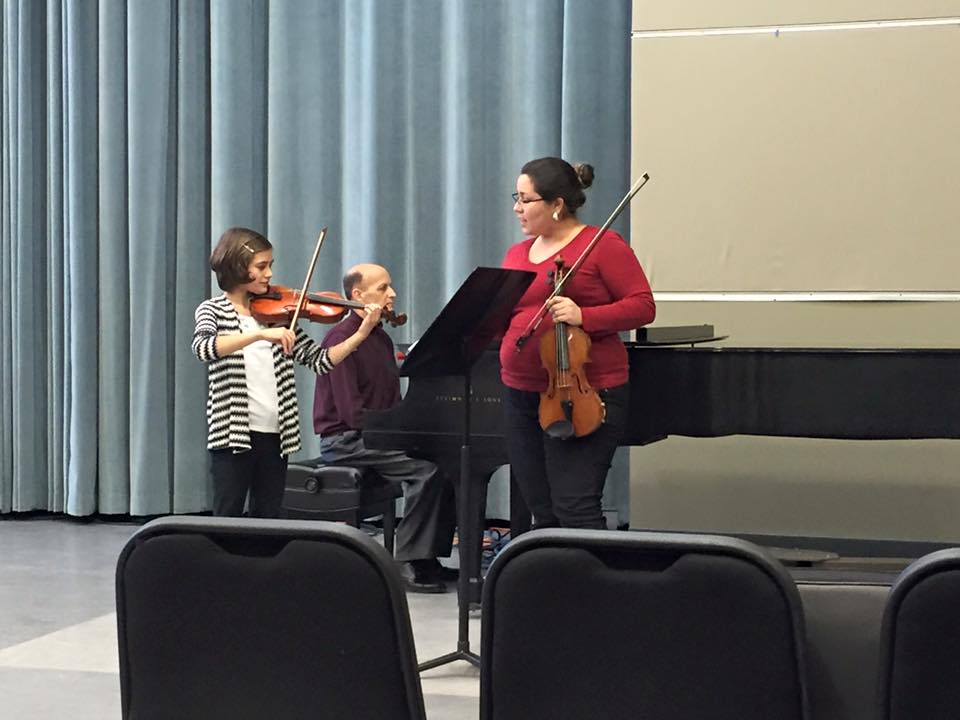
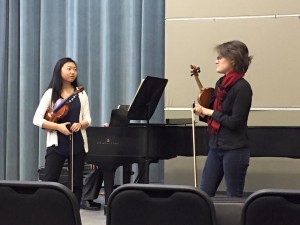
Ten-year-old Mikaela started the masterclass by performing the Martini Gavotte from Suzuki Book 3 for Luciana Arraes.

12801174_1049046958485823_6191544406544441785_n

Luciana reminded us that a gavotte is a dance, and worked with Mikaela’s bow arm to help the music sound more like dance steps. The first two notes, which are upbeats, lead to the third, which is a downbeat. She helped Mikaela find more flexibility in  her bow hand and flick her wrist to lift the bow off the string for a lighter sound.

The Martini Gavotte, which is mostly in G Major, has a few accidentals which are always tricky for students to remember. Luciana pointed out how special these notes are, and that the changing harmonies give the performer the opportunity to be extra expressive.

12799211_1049052611818591_5213307112444748105_n

The next performer was eighteen-year-old Marina, who performed the exposition of the Kabalevsky Violin Concerto. She was coached by Jessy Dube, who worked with her on some unconventional ways to get a bigger sound and find more resonance. Violinists are used to doing sophisticated coordination with their arms, but using the lower half of the body is unfamiliar. Jessy encouraged Marina to ground her feet firmly, and to use her hips and legs to create resistance to push and pull sound out of the instrument. The trick, Jessy explained, is to move in the same direction as your bow when you want resonance, and to move in the opposite direction when you want a sustained sound.

The third performer was freshman viola student Sophie, who studies with Philippe Chao at George Mason University. She played the slow movement of a viola concerto for Gabriel Polycarpo, who worked with her on focusing her musical energy and on refining her vibrato. Gabriel said that music is a succession of energy, and that the preparatory motion BEFORE playing helps to concentrate the performer’s energy. He also had her practice doing vibrato without her thumb on the instrument to feel more freedom, especially in her fourth finger.

Finally Andrew, a senior at George Mason University and a student of John Kilkenny,performed an etude on snare drum for percussionist Marlene Sanchez. One often thinks purely of rhythm when it comes to percussion, but rhythm was the thing Marlene focused the least on when working with him. She helped him to think musically, in long phrases. She also brought attention to the breath: how when one breathes in the rests, the breath should be in time and in character with the dynamics and the mood of the piece. One other interesting tip she gave him was to think of every note having its own personality.

After the students finished performing, Marlene, Jessy, Gabriel, and Luciana performed a piece for the audience and led a discussion about their experiences as professional musicians and as members of the YOA Orchestra of the Americas Global Leaders program.

You can learn more about the YOA Orchestra of the Americas at their website.

To find out more about private music lessons at Potomac Arts Academy, visit our Private Lessons page.