Mason Community Arts Academy
Categories
Announcements

Virginia House Of Delegates Honors MCAA and AFYP

Categories

This week, Delegate Kathy Tran presented our Executive Director Mary Lechter with House Resolution 804, in honor of Acting for Young People’s 25th anniversary in 2022. Co-signed by Delegate David Bulova and unanimously approved by the entire House of Delegates, the Resolution highlights AFYP’s long history in the surrounding community, and the even greater impact these programs have had, made possible in collaboration with Mason Community Arts Academy.

“I’m truly humbled by this honor.” notes Ms. Lechter. “This recognition is especially meaningful, as we have had the opportunity to work with children from both the Tran and Bulova families in our Acting and Music programs over the years. Perhaps most important of all is the feedback Delegate Tran shared in person, and includes in the Resolution itself, commending our staff and faculty for the authentic experiences they provide for our students. It has always been my goal to provide a warm, welcoming, and inclusive environment in which students can learn and grow. I am touched that we’ve been acknowledged for this core value of our programs.”

We look forward to providing quality arts education to the community for the next 25 years and beyond!

Written by Mary Lechter
Edited by Regina Schneider

Categories
Community Outreach Instruments in the Attic

MCAA Congratulates GRAMMY Award winner and Instruments in the Attic Recipient Annie Ray

Categories

Throughout its existence, Mason Community Arts Academy’s Instruments in the Attic (IiA) Program has had the pleasure of providing recycled instruments to teachers and students in Northern Virginia, the DMV, as well as throughout the United States and abroad, in addition to serving our local community here. Our goal is always to get our inventory into the hands of those that need it, and thanks to the generosity of donors, we are able to continuously fulfill our mission and provide teachers with the instruments and supplies they need to create a lasting impact through music education. As a result, we have been fortunate to connect and develop lasting relationships with incredible and inspiring teachers in our local community and beyond.

Two of IiA’s main supporters are Jenna and Jason Day, of Day Violins. Their immense generosity, tireless dedication to our program and its mission, and unending willingness to volunteer their time makes all of IiA’s string instrument loans possible. They are a critical piece of IiA’s impact and existence, and their connection to the community both locally and afar has allowed our program to broaden its reach and strengthen its influence.

In 2022, Jenna Day connected Annie Ray (Annandale High School Orchestra Director and Performing Arts Chair) with IiA after learning that her program’s need of instruments was hindering the aspirations and goals she had for her students. Ray had goals of starting the Crescendo Orchestra for students with severe developmental and intellectual disabilities. Her goal was to teach these students how to play an instrument with one-on-one instruction tailored to their needs, and she was seeking the inventory to be able to make it happen.

There are people that come into your life that touch your heart instantly and so deeply that you are a better person forever. Annie Ray’s positive attitude and ability to always see the potential in others has motivated me to reach deeper and further into the community to bless lives with IIA instruments. Through my involvement with the Crescendo Orchestra, I have been reminded that music is the universal language, one we can all speak.

Jenna Day, describing Annie Ray

The Crescendo Orchestra is among Annie Ray’s many accomplishments and endeavors through which she changes her students’ lives for the better. On February 3, 2024, Ray was presented with the 2024 GRAMMY Music Educator Award. Annie Ray was selected as the GRAMMY winner out of more than 2,000 initial nominees and was honored in Los Angeles as a part of GRAMMY Week.

I am honored to have received this award on behalf of the students of Annandale, Crescendo, and Parent Orchestras who every day teach me so much more than I will ever teach them. This award belongs not to me, but the community of musicians, teachers, and supporting organizations that make our program what it is. Thank you especially to Instruments in the Attic for supplying the instruments to Crescendo Orchestra that give our students access to music making. I encourage directors to look into the resources of United Sound, Giving Bach, String Rise, and other organizations so every student can have the opportunity to be a part of our ensembles.

Annie Ray

Mason Community Arts Academy and Instruments in the Attic extend our sincerest congratulations to Annie Ray and her students on this incredible accomplishment. We are fortunate to have educators like Ms. Ray in our community and look forward to continued collaboration. 

Written by Dr. Samantha Clarke
Edited by Regina Schneider
Categories
Events Music Uncategorized

Teaching Artists at Work: A Behind-the-Scenes Look at the Rehearsal Process for the Academy Music Faculty Chamber Recital 

Categories

Walking through the halls of the Academy building on Chain Bridge Road, you might hear a myriad of instrument combinations this week. Saxophone and guitar; flute, oboe, and piano; violin and viola; vocalists; and piano duos are a few collections of sounds one might hear wandering through the building. In this article, we’ll give you a behind-the-scenes look at our Teaching Artists’ preparation for the upcoming Academy Music Faculty Chamber Recital and what it takes to prepare for this kind of performance. 

Wandering over to Unit A6, you might hear a curious pairing of instruments, a soprano saxophone and a guitar. Teaching Artists Ariel Williams (saxophone) and Brian Slaymaker (guitar) are hard at work rehearsing a tango composed by Astor Piazzolla. The piece, Nightclub 1960, evokes the dimly lit music halls of the 1960s with an exciting combination of a tango and the popular bossa nova style of the time.  

At the moment, Ariel and Brian are rehearsing the many tempo changes in the piece, from the upbeat, thrilling tango sections to the smooth lyrical sections. In addition to tempo variety, another challenging aspect of the work is the difference in timbre, musical tone color, between the two instruments. These expert musicians will need to listen carefully to one another to blend their tones to create a harmonious ensemble sound. 

Let us visit another chamber ensemble! In Unit A3, Dr. Nayoon Choi (flute), Jiyoon Oh (oboe), and Yechan Lim (piano) are rehearsing Suite Bourgeoise by Malcolm Arnold. Written when the composer was just 18 years old, Suite showcases Arnold’s youthful wit and penchant for melodic and stylistic variety. Our faculty trio is preparing to perform three movements from the work: Tango, Ballade, and Valse. 

Rehearsing Suite Bourgeoise presents the challenge of balancing the sharp, rhythmic precision of the Tango and Valse with the fluid, lyrical expression required in the Ballade. To achieve a unified ensemble balance across flute, oboe, and piano, the trio utilizes meticulous pulse subdivision and dynamic adjustment during rehearsals. Working through Arnold’s vibrant blend of playfulness and nostalgia makes the collaborative process both demanding and immensely rewarding. 

Suddenly, exuberant, passionate chords ring out from Unit A2! Carol Feather Martin and Dr. Estrella Hong are rehearsing our exciting recital closer, the Overture movement of Nicolai Kapustin’s Sinfonietta, Op. 41. Kapustin composes in a style more at home in the jazz halls of America in the 1920s than the Russian concert halls of his compositional home in Moscow. Originally an orchestral piece, this four-hands arrangement of Sinfonietta for piano reflects the blending of these musical styles in Russian-inspired harmonic textures and melodic themes masterfully combined with a pseudo-improvisatory style. 

Sinfonietta’s mix of styles makes it great fun to perform, but also challenging to rehearse. The piece includes complex rhythmic patterns and syncopation, which gives it a jazzy feel. The performers need to find a tempo that is achievable to perform and enjoyable for the audience to listen to. Carol and Estrella worked hard to carefully rehearse their parts individually before beginning to rehearse together. This individual accountability makes their rehearsal time together more productive. They can spend time rehearsing the ensemble aspects of the piece, like hand crossings and group accents, and avoid wasting valuable rehearsal time. 

If frozen in time, these scenes form a tableaux series that represents the heart of the Teaching Artist title. In addition to being dedicated pedagogues and teachers, our faculty are also top artists and professionals in their fields. We hope you’ll join us this Sunday, November 1 at 3 p.m. as we celebrate our Teaching Artists’ creativity and spirit of collaboration. 

References

Nightclub 1960 Full Program Notes

Kevin Melendez, Graduate Recital Program Notes (2023)

Suite Bourgeoise Full Program Notes

The Music Realm, Suite Bourgeoise Product Description

Sinfonietta Full Program Notes

Tom Neenan, Program Notes (2022)

Categories
Music Private Music Lessons Uncategorized

A Collaborative Adventure: Tips from a Collaborative Pianist

Categories

Carol Feather Martin, collaborative pianist, with student violinist during the Spring 2026 Academy Recitals.

In addition to teaching piano at the Academy, Carol Feather Martin also serves as a collaborative pianist for our student and faculty recitals. In this article, she provides tips and tricks that every musician should know before embarking on the collaborative adventure of working with a collaborative pianist.


Serving as a collaborative pianist is one way for keyboard musicians to have the opportunity to perform chamber music. Yes, it is a collaborative adventure, not just an accompanist. While you might think that the duty of making things match and work together is magical or falls on the keyboard player alone, that is not true.

All participants are involved in the subtle (and sometimes not so subtle) art of cueing, or communicating with non-verbal movements or gestures. A musician cues to begin the selection and when things change throughout the piece – such as change of tempo, mood, or dynamic. Each player should know what all the other parts are doing at any given time. Melodies and other interesting lines are often traded between instruments.

Here is a quick checklist for anyone looking to collaborate with a keyboard musician.

  1. Learn how to give cues and communicate.
  2. Be prepared for teamwork.
  3. Study the piano score. Know your music and be able to keep steady rhythm throughout.
  4. Be respectful of everyone’s time. Arrive early so that you and your instrument are ready to go.
  5. Provide clean PDF copies (or originals) to the keyboard musician in a timely manner. If submitted digitally, these should be high-quality scans, not photos.
  6. Be ready to have fun.

Written by Carol Feather Martin

Edited by Ariel Williams

Categories
Music Uncategorized

Four Practice Techniques for Musicians Who Feel “Stuck”

Categories

Practice techniques are important strategies to have in your musical “toolbox” when you come across a challenging spot while practicing. Generally, these strategies can help to narrow your focus on a specific issue or give your brain a little extra time to think about what exactly needs to happen for successful execution.

Here are four strategies to try:

  • If you’ve come across a section that is giving you trouble, it’s best to avoid starting an entire phrase over and hoping for the best. Identify the spot that is giving you the most trouble and use a practice technique to break it down into small, manageable bits. You’ll find that practice is a lot more efficient this way!
  • Adding a rest between a shift, chord change, or a string crossing gives you time to form the shape you need without being rushed. I like to start with a half rest, then go to a quarter rest.
  • When you’re trying to reach a tempo that is too fast to handle right now practice the piece at a much slower tempo that you can achieve 100% accuracy. After you’ve become more comfortable with the slower tempo increase by 4-8 BPMs. Continue the process of adding speed in small increments as you master each tempo. There should be no hurry to play fast, and sloppy. You will play much better fast, by building your speed slowly.
  • It is effective to practice using one hand at a time with just about every stringed instrument including the piano. For violin and guitar strumming, picking, or bowing the rhythm without your fretting hand focuses directly on the rhythm, and the up or down bows/strums.

Written by Brian Slaymaker and Amanda Goodwin
Edited by Regina Schneider
Categories
Instruments in the Attic

IiA Provides 20 Instruments to Students in Uganda

Categories

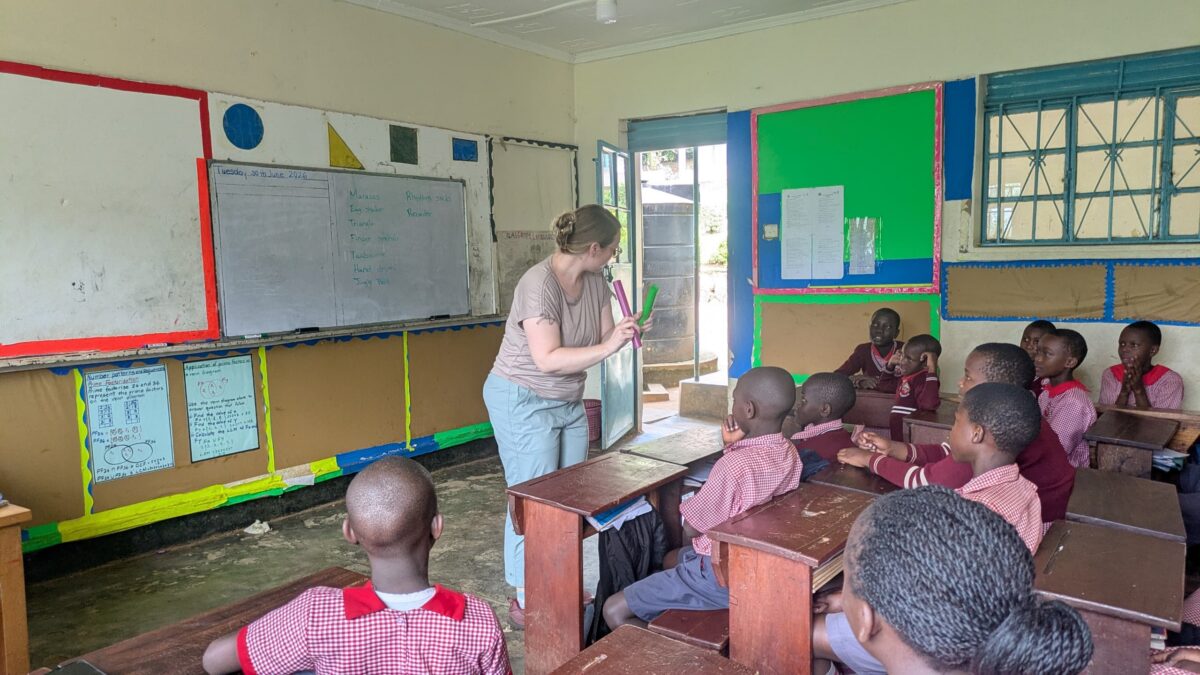
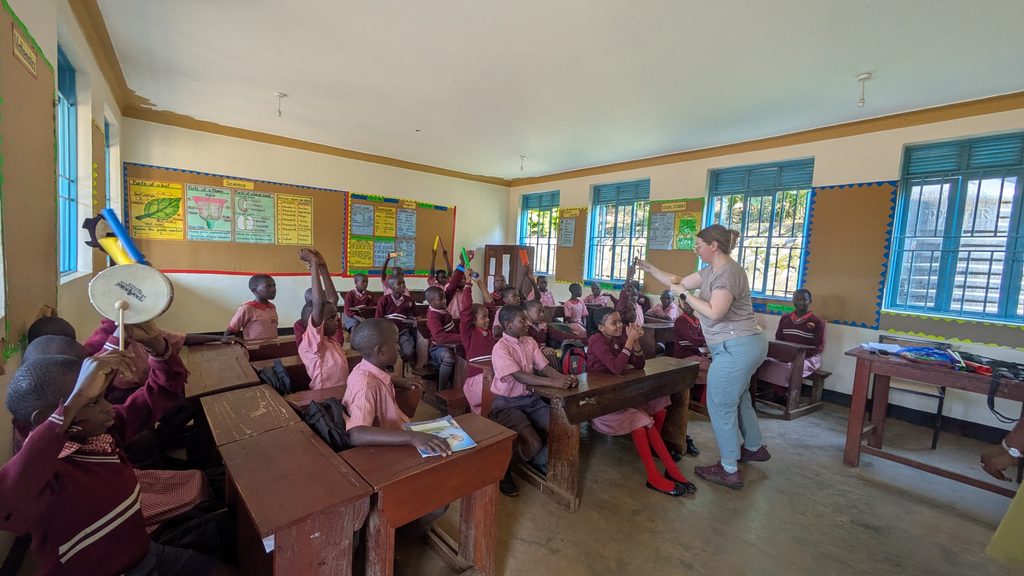
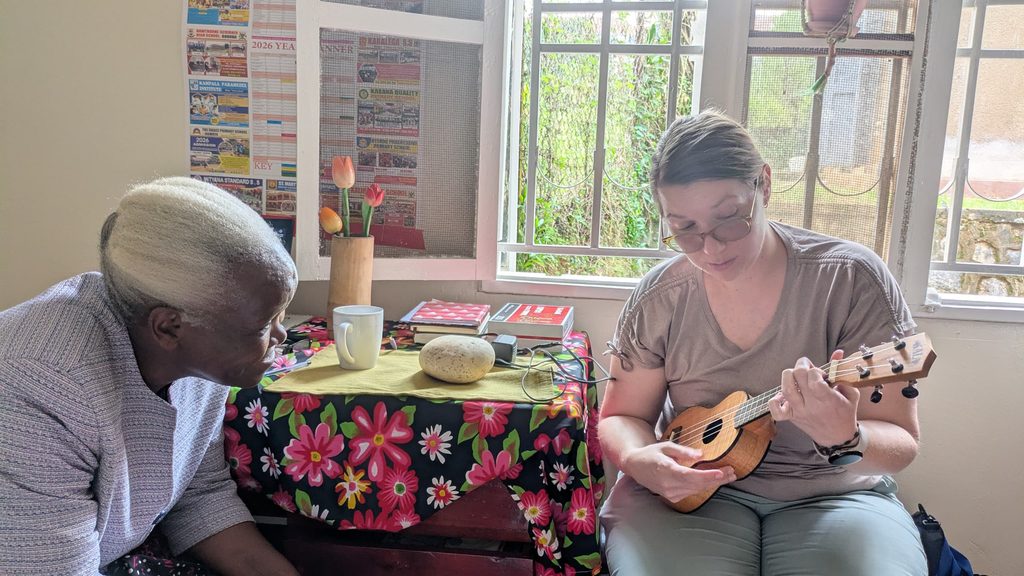
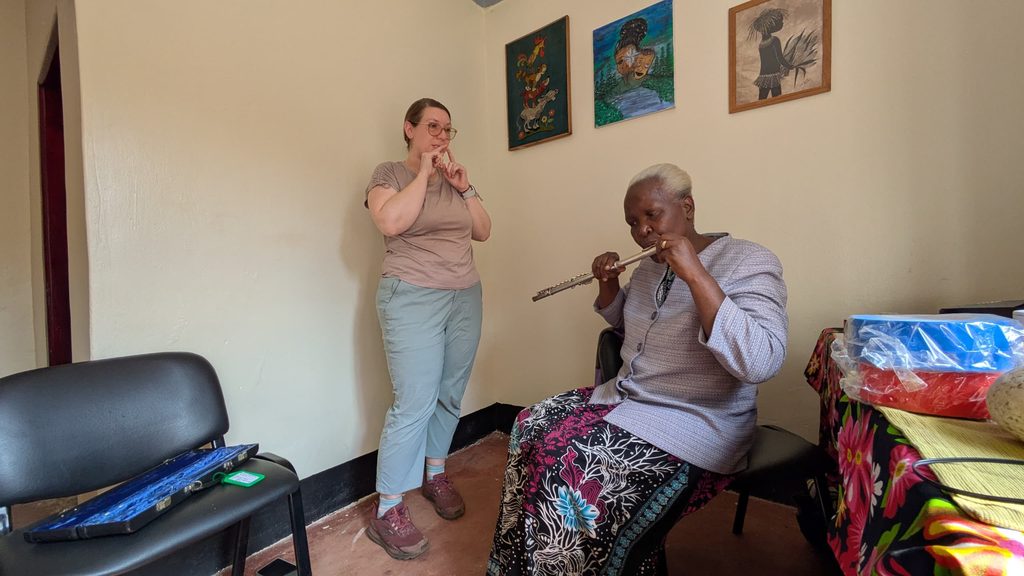
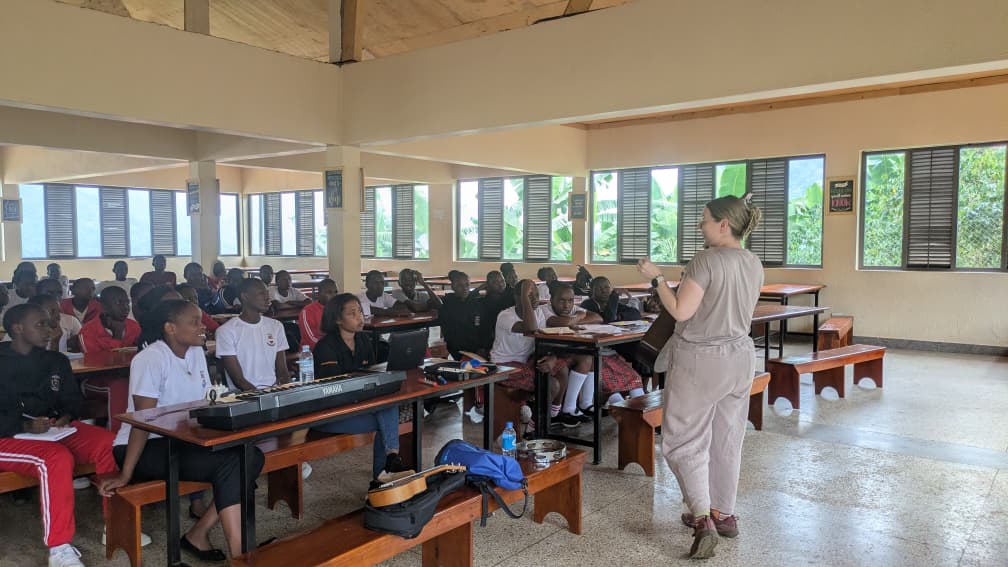
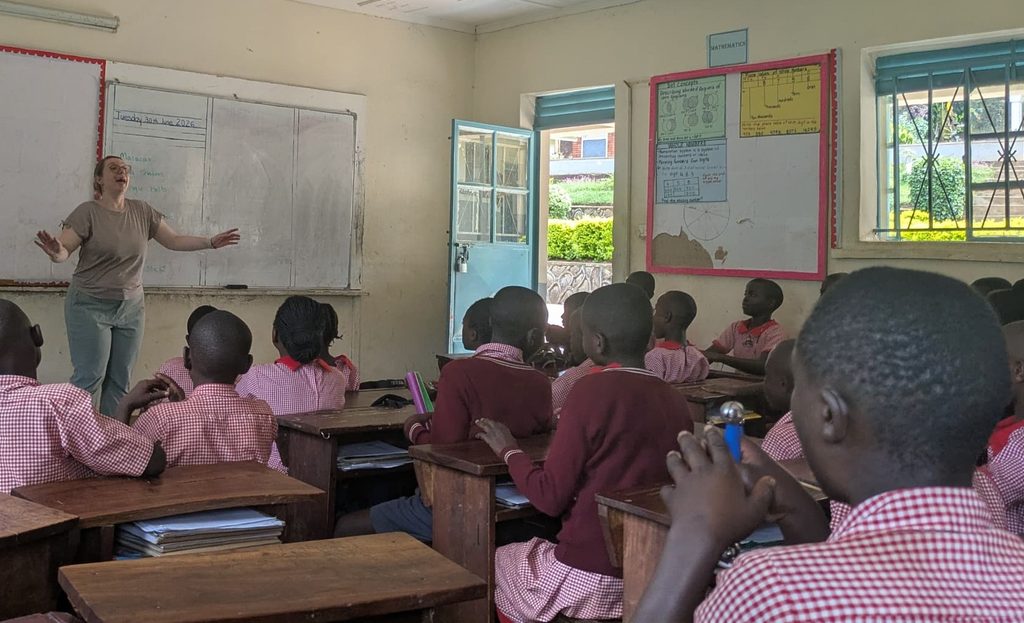
Mason Community Arts Academy administrative staff member, Dr. MeHaley Babich, provided 20 instruments from Instruments in the Attic to students in Uganda this past summer. These instruments include one ukulele, two hand drums, three tambourines, one tone chime, two pairs of jingle bells, three maracas, one pair of egg shakers, one pair of castanets, one triangle, one recorder, and four flutes.

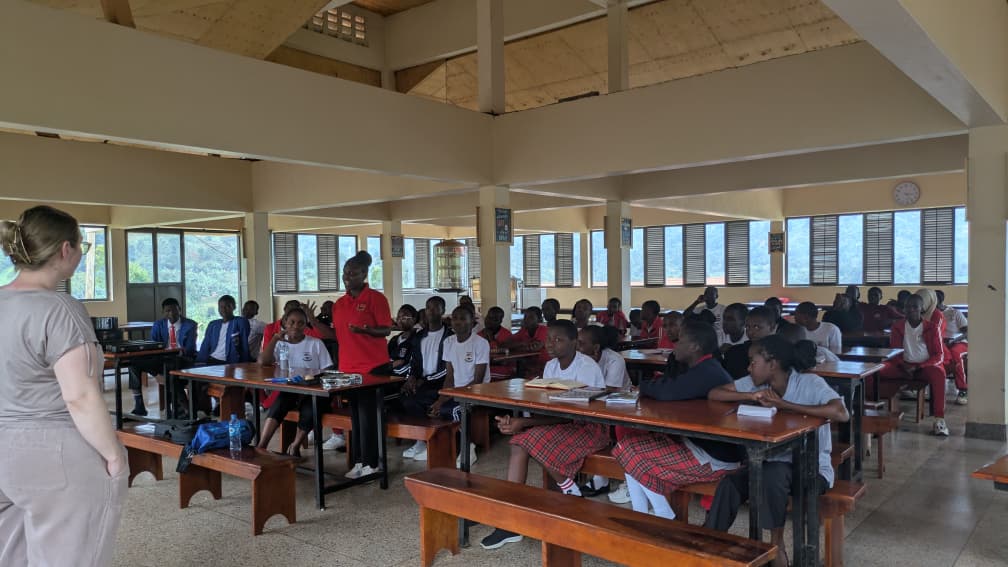
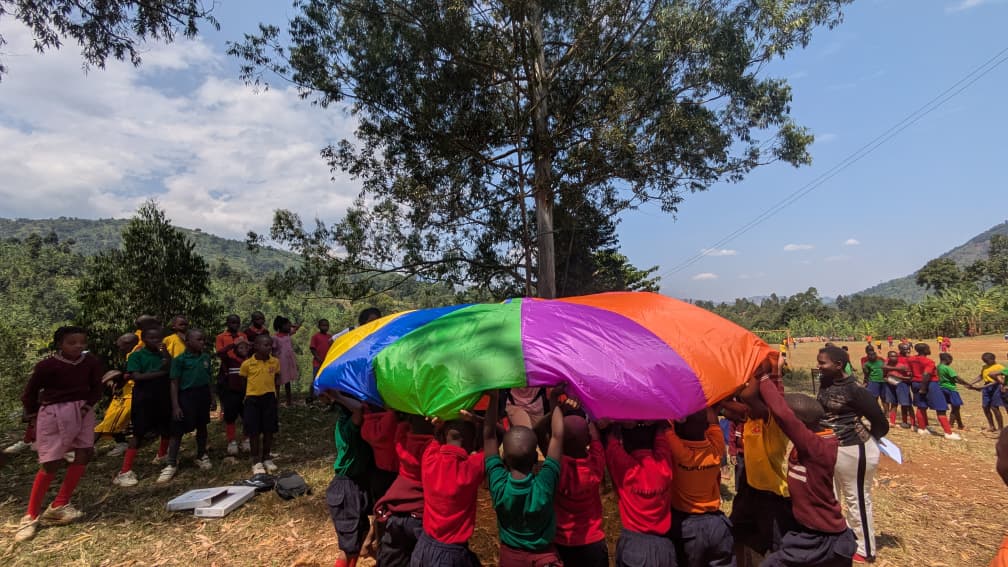
Outside of the Academy, MeHaley teaches general music at Arlington Traditional School in Arlington, Virginia. She spent three weeks in Uganda teaching workshops on basic music theory and appreciation, and teaching students how to play their new instruments.

This trip was part of a long-standing partnership between Arlington Traditional School and REACH for Uganda. Staff from Arlington Traditional School travel to Uganda several times a year to teach classes and provide supplies and instruments to students at multiple schools. We hope to provide more instruments as a part of this initiative in the future!

Categories
Instruments in the Attic

IiA Provides 9 Brass Instruments to New Generation Marching Band

Categories

Instruments in the Attic (IiA), the Academy’s instrument donation program, recently provided nine brass instruments (one mellophone, six trumpets, two trombones, and a collection of mutes and other accessories), to New Generation Marching Band. New Generation Marching Band is a nonprofit youth marching band based in Portsmouth, Virginia that serves the larger Hampton Roads area.

About the organization: “Founded in 1992 by Lionel Hines Sr., New Generation Marching Band is a nonprofit youth development organization based in Portsmouth, Virginia, dedicated to transforming lives through music, mentorship, and opportunity. For more than three decades, we have empowered young people by providing a safe, structured environment where they can develop leadership skills, build confidence, and discover their full potential through the performing arts. Serving more than 100 youth and their families, New Generation is more than a marching band—we are a community committed to building confident young leaders.”

For more information on how to support IiA, donate an instrument, or request a donation, visit our IiA webpage.