Mason Community Arts Academy
Categories
Instruments in the Attic

Instruments in the Attic Provides 73 Instruments to Support Guatemala Schools

Categories

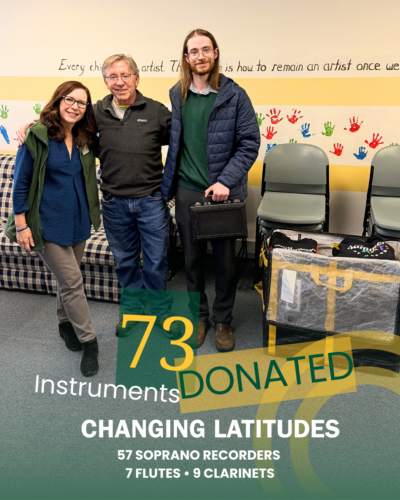
Mark Denicore cofounded the non-profit organization, Changing Latitudes, to “raise awareness and funds for the less fortunate.” The Academy and Instruments in the Attic (IiA) have worked with Changing Latitudes in previous years to provide instruments to students in both Haiti and Guatemala. Changing Latitudes aims to support communities in developing countries, including supporting scholarships for students’ education and capital improvements at schools.

As part of this year’s trip, the organization’s fifth straight trip to Guatemala, they will be delivering instruments to students across six schools throughout Guatemala. Most of the instruments will be donated to Escuela Oficial Urbana Mixta de Educación Especial, located in Paztún, Guatemala. IiA provided Changing Latitudes with 73 instruments to deliver to these schools: 57 soprano recorders, seven flutes, and nine clarinets.

Written by Lucas Kremer
Edited by Regina Schneider
Categories
Faculty News

Faculty Enrichment Fund Award: Youngbin Ko

Categories

The Academy values the importance of our teacher’s professional development. The Faculty Enrichment Fund annually provides partial and full reimbursement for teachers to attend conferences, workshops, and teacher training sessions. Academy Violin Jr. Instructor, Youngbin Ko, writes about her experience at the American String Teacher’s Association conference:

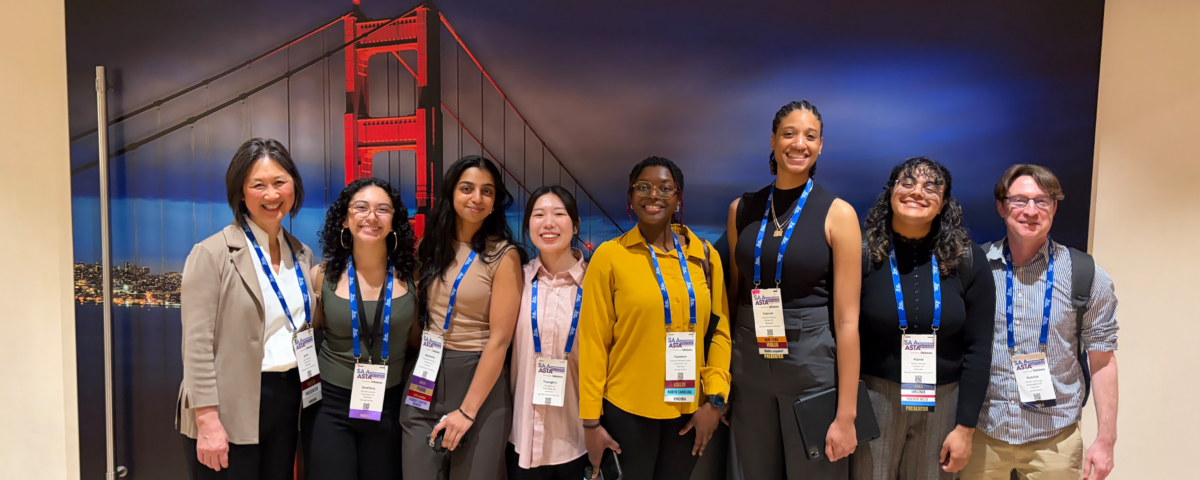
I am deeply grateful to Mason Community Arts Academy for supporting professional development opportunities for their teaching faculties. The Faculty Enrichment Fund Award allowed me to attend the American String Teachers Association and Suzuki Association of the Americas conference in San Francisco this February. As my first time attending the conference, it was a meaningful opportunity to connect with inspiring teachers and gain valuable insights from a variety of sessions. I also had the privilege of participating in a session titled “Getting to the Core of Bow Strokes,” presented by Professor June Huang and colleagues from George Mason University, which discussed effective ways to engage and develop the proper muscles for healthy practice.

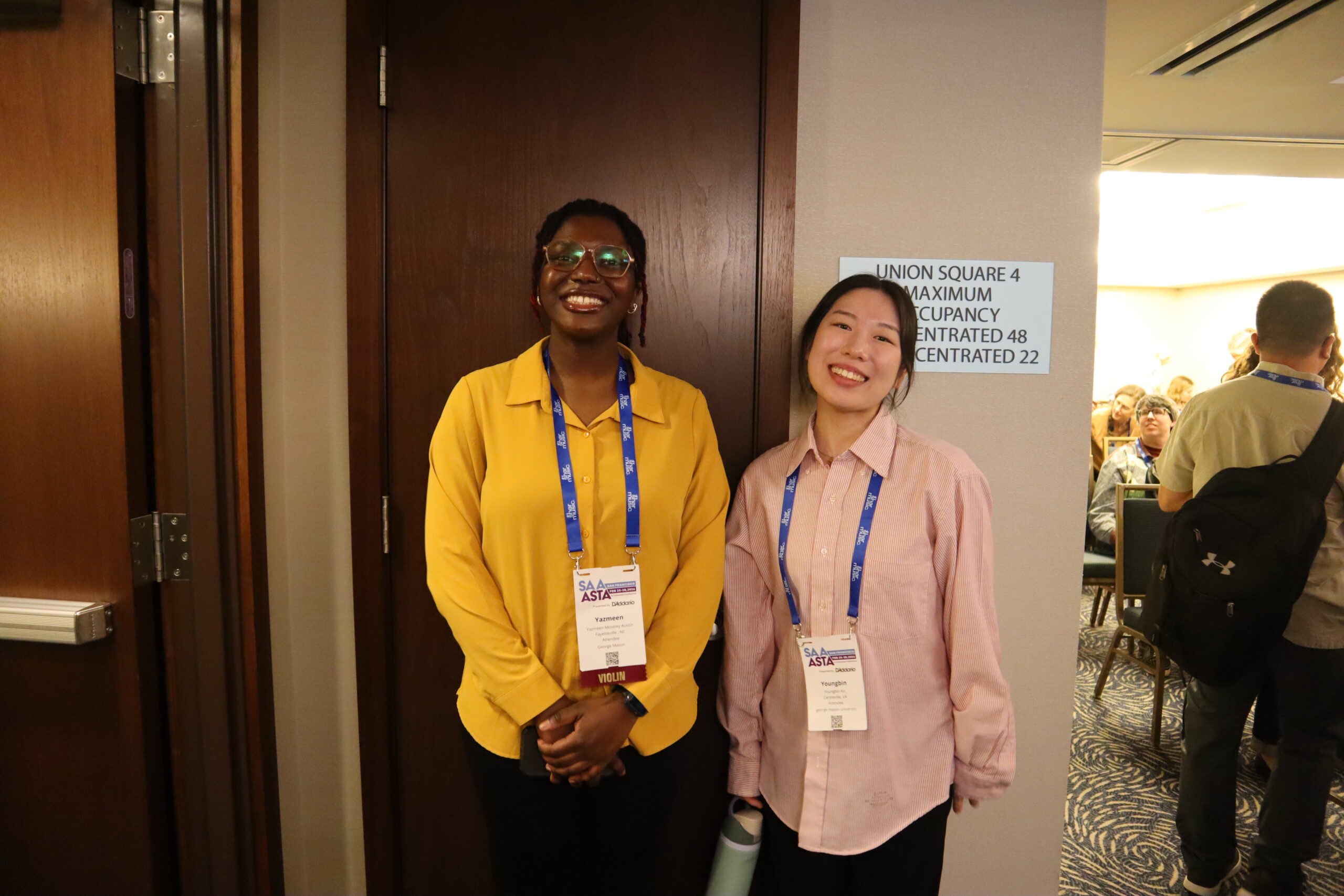
Youngbin Ko (right)

Through this conference, I gained crucial perspectives on how I can build reliable relationships with both students and their parents as a teacher to support students’ musical and educational growth. I learned strategies for helping students approach practice as a form of deliberate play rather than a task, while fostering healthy musicianship through achievable goals, efficient learning activities, and celebrating their progress.

In technical sessions, I also learned more about the muscle movements involved in violin playing, particularly for holding the instrument and executing right-arm techniques such as string crossing. Participating in exercises during the sessions helped deepen my understanding of the instrument and the physical mechanism of my body while playing the violin.

Professor June Huang presenting at the conference.

Furthermore, through the concept of the one-point lesson, I gained ideas on how to focus on a single teaching objective within a lesson and structure teaching segments in a clear and accessible way to effectively deliver that point. This approach also helped me consider how to set specific goals that support students’ successful learning and understanding of that particular concept.

This experience allowed me to reflect on and refine my teaching philosophy and pedagogical strategies, helping me consider how to expand them moving forward. It reminded me that my role as a teacher goes beyond imparting musical knowledge and technique; it involves participating in a lifelong learning process where students learn within healthy, supportive connections and develop into well-rounded members of society.

I sincerely appreciate, once again, Mason Community Arts Academy for providing me with such invaluable experiences that allowed me to engage in meaningful learning and continue nurturing myself as a better educator.

Edited by Regina Schneider

Categories
Instruments in the Attic

IiA Gifts 33 Instruments to Local Non-Profit

Categories

Instruments in the Attic (IiA) recently provided instruments to the Culmore Teen Center, based in Falls Church, Virginia.

The Culmore Teen Center is partnered with Second Story, a local non-profit organization that “transforms the lives of local youth and families in need by providing safe havens and opportunities to grow and thrive through our residential and community-based programs…We help families in underserved communities in Fairfax County through our family resource centers, teen center, and after-school programs.”

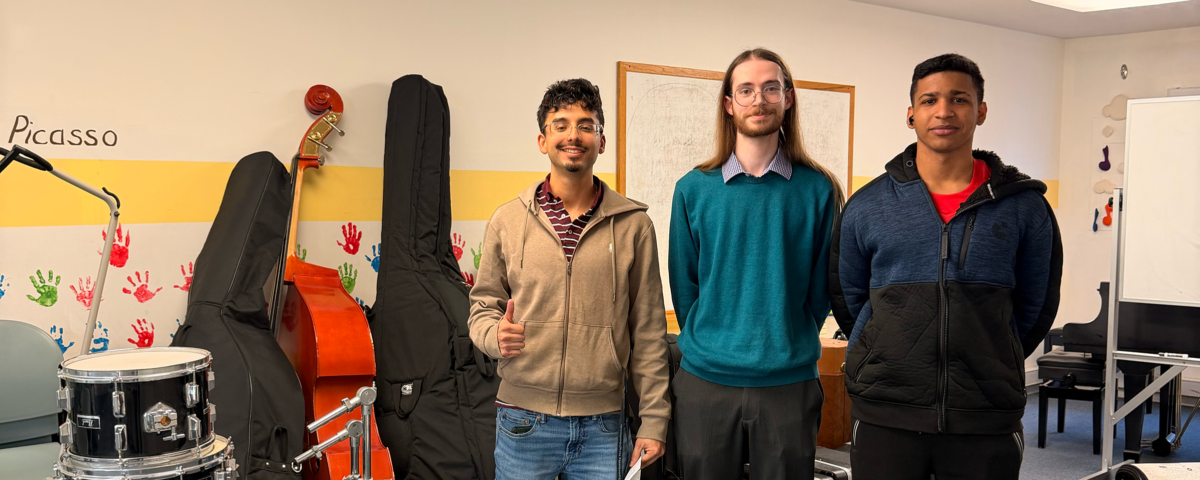
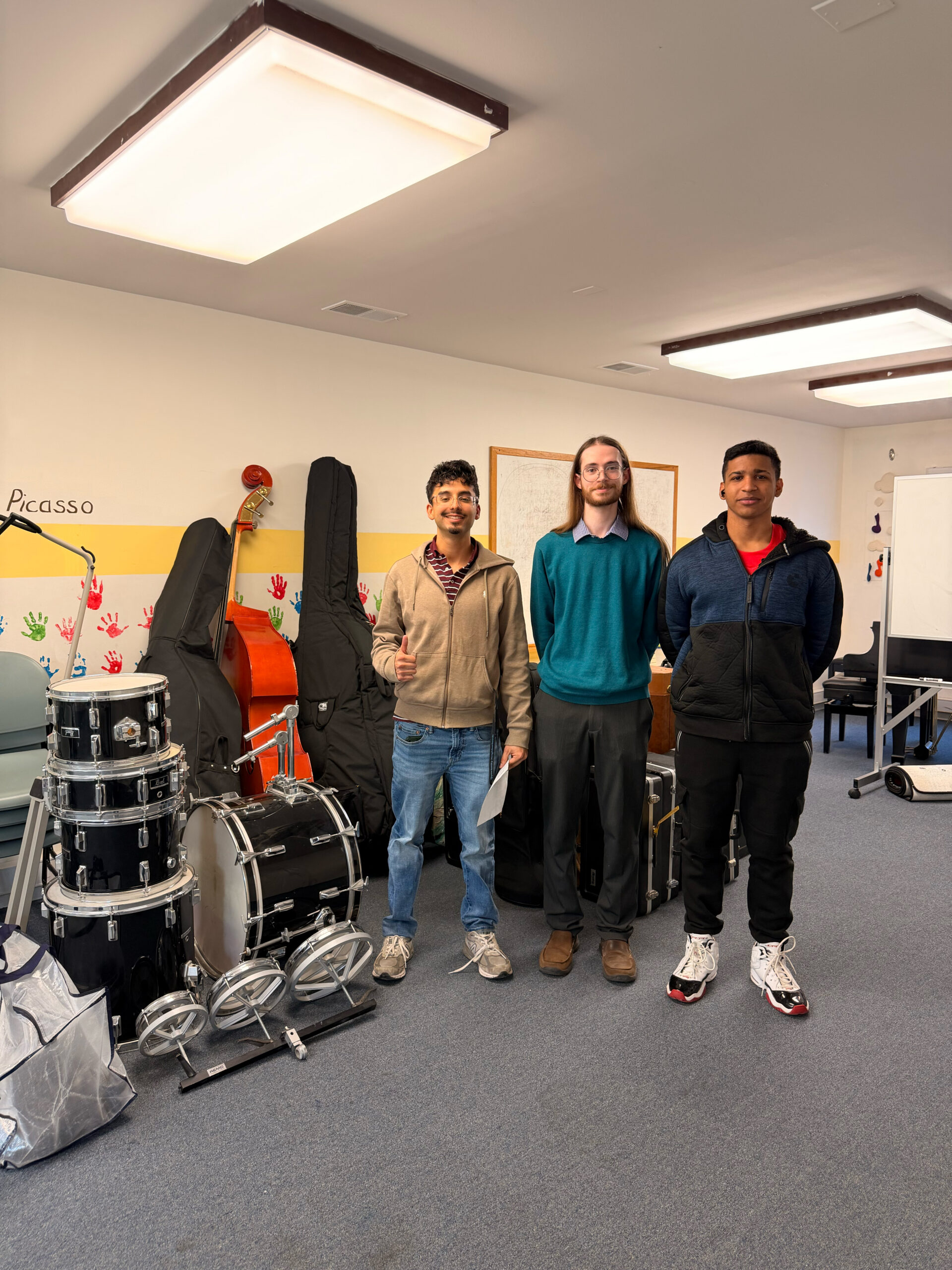
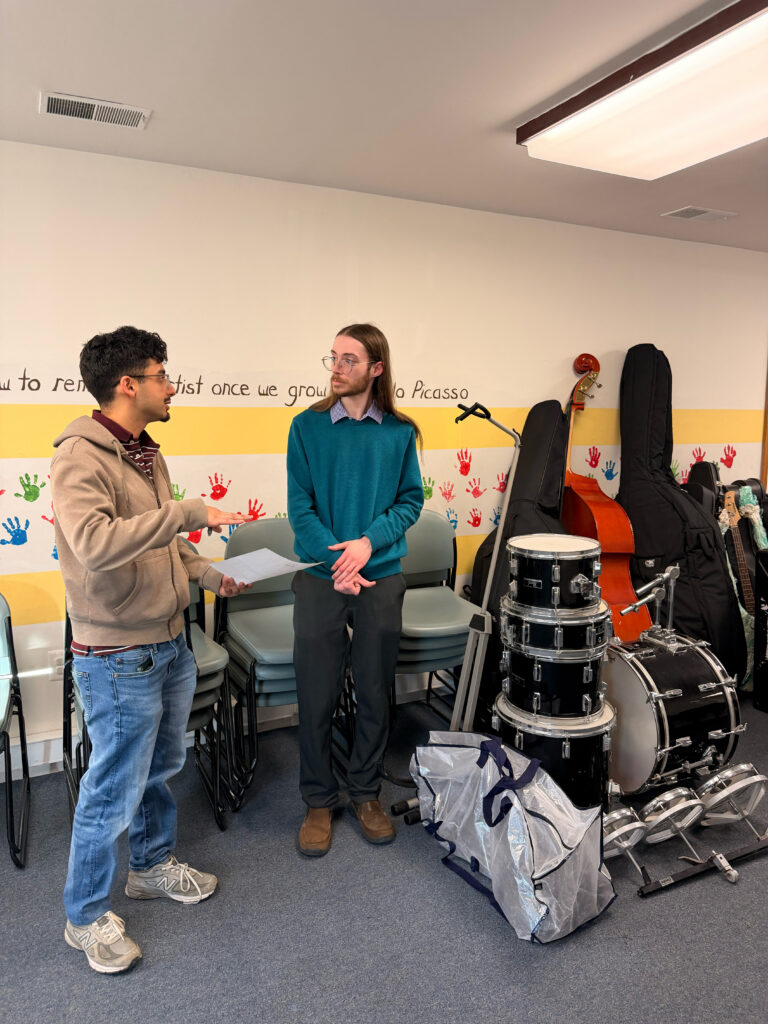
IiA was able to provide a total of 33 instruments: six acoustic guitars, five trumpets, five trombones, five tenor saxophones, five electric basses, three upright basses, two keyboards, one electric guitar, and one drum set.

Categories
Instruments in the Attic

IiA Provides 42 Instruments to Non-Profit Waldorf-Inspired school

Categories

The Academy’s Instruments in the Attic (IiA) program collects instruments and equipment donated from the public to help support music teachers, students, and organizations.

Courtney Janeski, volunteer drums and percussion teacher for grades 7–12 at Hearthstone School, contacted the Academy to request instruments for their school.

Located in Sperryville, the Hearthstone School is a “small, independent, non-profit Waldorf-inspired school.” Janeski writes:

Hearthstone School serves students from pre-kindergarten through 12th grade. Our mission is to honor the whole child — heart, head, and hands — through a holistic, creative, and inclusive educational environment. Music plays a vital role in that mission, offering our students a powerful way to connect, communicate, and express themselves.

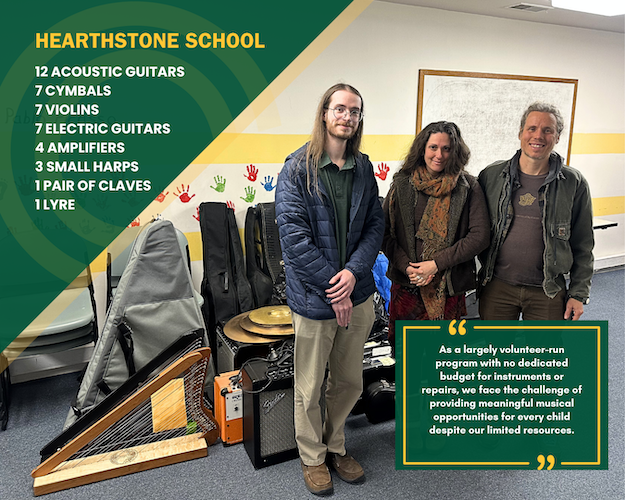
As a largely volunteer-run program with no dedicated budget for instruments or repairs, we face the challenge of providing meaningful musical opportunities for every child despite our limited resources.

In the lower grades, students begin their musical journey with the pentatonic scale, following a Waldorf-inspired approach that nurtures natural musical development and emotional expression. Pentatonic instruments — such as flutes and lyres — are in very high need, as our current collection is small and aging.

In grades 4–6, students are introduced to the violin, deepening their understanding of melody, harmony, and ensemble playing. Our current violins are quite old and in disrepair.

In the high school grades (9-12), I lead two student rock bands in our own “school of rock,” where music becomes a powerful outlet for emotional expression, creativity, teamwork, and confidence. Our percussion equipment is extremely vintage and in dire need of repair or replacement.

We’re pleased to have provided the Hearthstone School with 42 instruments: 12 acoustic guitars, 7 cymbals, 7 violins, 7 electric guitars, 4 amplifiers, 3 small harps, 1 pair of claves, and 1 lyre.

Categories
Announcements

The Academy Announces it’s New Extension Mark

Categories

New Look, Same Academy

Mason Community Arts Academy is excited to announce a refreshed look! As the community arts division of George Mason University’s College of Visual and Performing Arts, we’re proud to be a part of the commonwealth’s largest, most innovative, and most diverse university. In the past two years, the university has launched a new branding initiative to take its next steps forward for a cohesive identity. As a part of the university, our new extension mark aligns with the updated George Mason color palette and updated font.